DoubleShot Coffee Company
Coffee that tastes good without milk and sugar.
"Testimonials" might be a strong word
Roastmaster's Blog
A New Theory of Relativity
When I was ten years old, I designed a mansion. It was really more of a castle, but when I took drafting class in high school, I fleshed it out into my dream home ā something akin to the mythical Wayne Manor.
I was born with an affliction: a poor kid with expensive taste. I remember, at around thirteen years old, going on a shopping trip to the mall with my mom to buy a pair of khaki pants. I found a pair that I loved, but they were way out of our price range. So we spent the rest of the day going from one department store to the next trying on less-expensive khakis that Iām sure were perfectly fine. But Iād already made up my mind. And apparently I was a brat.
After I started my first company out of college and transitioned from football to adventure sports, I decided I needed a four-wheel drive SUV. So I hightailed it to the Land Rover dealership to purchase the safari vehicle of my youthful dreams. During the two years I spent out west before returning to Tulsa to open DoubleShot, I basically lived out of that Discovery. I saw some amazing places and learned to live a simple life, but I still harbored the dream of being rich. And famous. My business plan boldly forecasted rapidly escalating sales, following a path I predicted in my early-20s: that I would be a millionaire by age 33.
From 2004-2007, I lived very primitively. And by the end of my thirty-third year of existence, despite expectations for my lifeās fortune, I was destitute. Iād grown intimate with poverty, dodging debt collectors and the repo man. Still to this day, my fight-or-flight instinct kicks in whenever my phone rings. But Iāve subsisted by escaping into the wilderness or a good book, making things instead of buying them, self-reliant in all things, finding pleasure in simplicity and nuance.
I spent a couple of years peering into that other world. My girlfriend at the tail end of my 30s lived in a mansion, took airlines instead of long drives, and opted for luxury accommodations in her travels. She didnāt think twice about dining at expensive restaurants and could easily afford extravagances Iād only dreamed of. Iād learned it was difficult to be happy when you canāt pay the bills. But during that period of my life, I discovered that satisfaction comes from earning, and thereās more delight to be found in small luxuries than extravagant ones.Ā
I can spend hours in a creek bed picking up rocks. Sit in front of that wonderful Moran at Gilcrease staring off into a painted landscape that takes my imagination on a meandering journey to a place of freedom and serenity. I cherish a good book more than a night on the town. And an amazing cup of coffee ⦠I wouldnāt trade it for the best wine in the world.
āAffordable luxuries,ā we call those. Even the most expensive coffees weāve ever sold donāt hold a candle to the price (per milliliter) of many folksā everyday wine. We have an idea of what coffee should cost and itās not the same as our idea of what things like wine should cost. Wine almost always comes in the same size bottle, so at least you can compare one to another. Coffee bags have gotten smaller, with most companies selling 12-ounce bags or the new trend of 10 ounces, usually for the price of our 16-ounce bag of coffee, if not more
Oftentimes when I drink wine, I think all winemakers mustāve gone to the same school. Itās like that in coffee too, but our school sucks. Roasters tend to be baristas who got promoted (like a bartender being promoted to vintner) or business owners who got the automated system (I donāt know if there are wine-making machines that you can dump grapes into and then let the computer do the rest). Roast profiles all copy each other, probably letting AI do the job, and produce a bunch of coffee that might taste good to some judge at a Coffee Quality Institute event but doesnāt taste good to me.
Itās a tough business, Iāve learned. Now, Iām not in it for riches. I gave up that dream a long time ago. I donāt want a boat or a membership at the country club. You donāt have to worry; I wonāt show up at your cocktail party. (I wouldnāt even have anything to wear.) No, I do this for an entirely different reason. I do it because I actually love coffee and everything it stands for.
But letās take a step back.
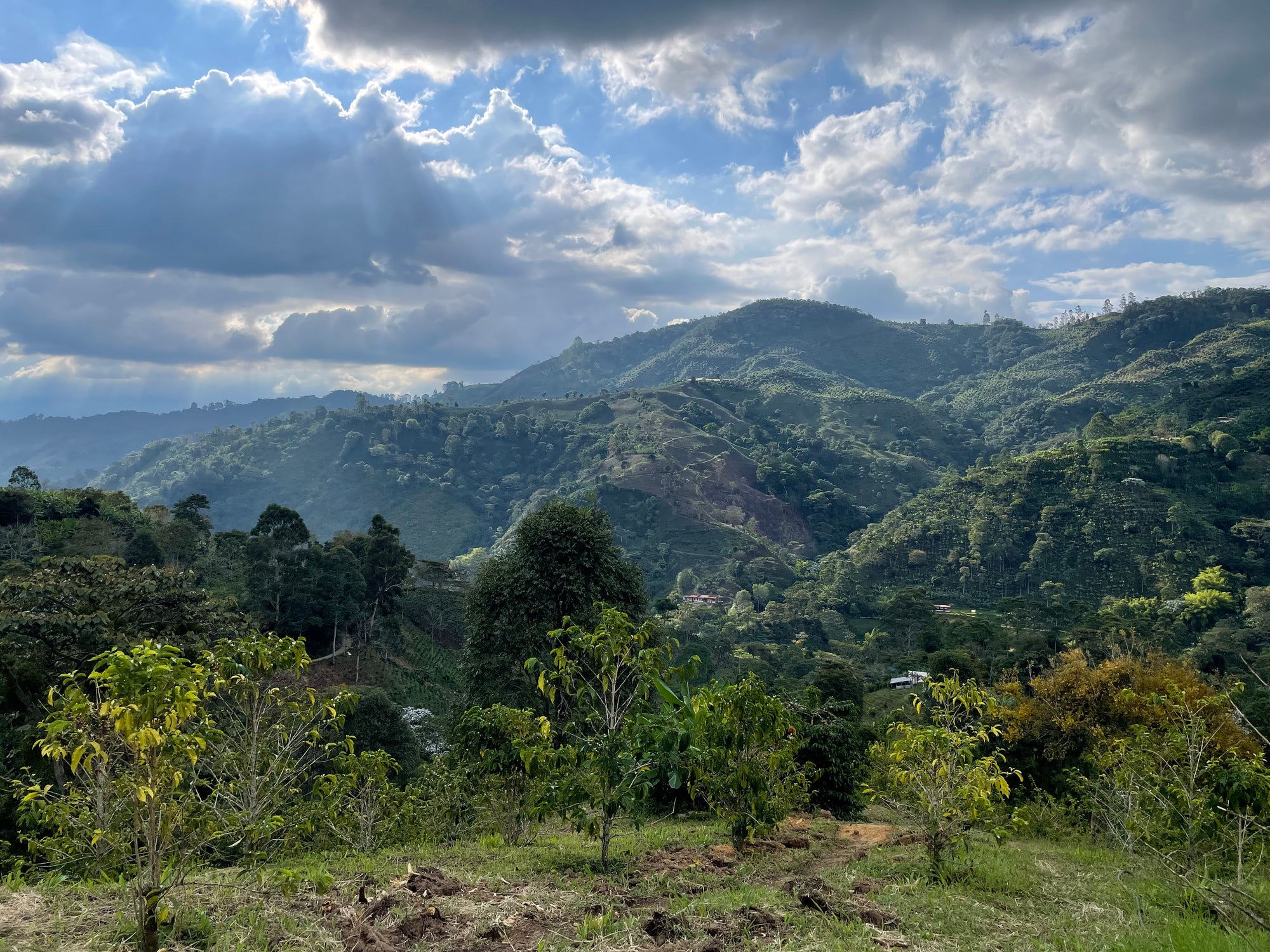
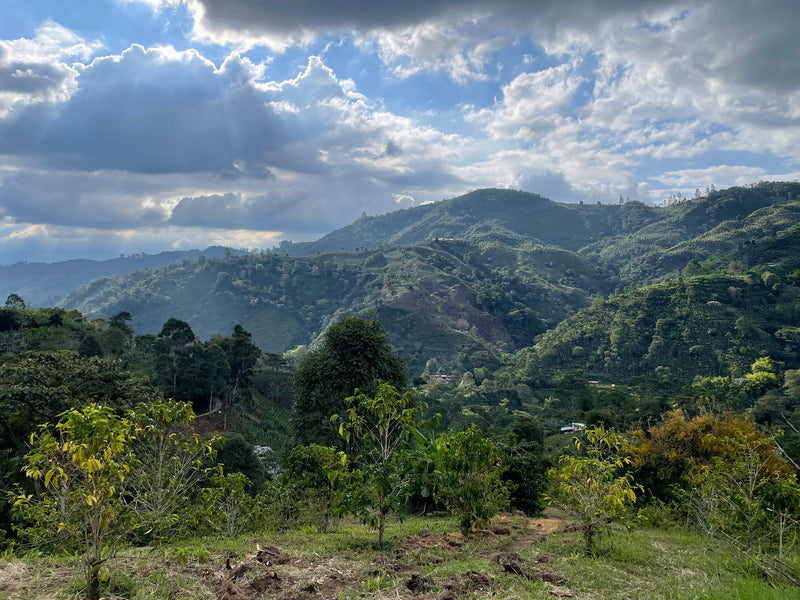
Coffee grounds are simply smashed-up coffee beans, which are the roasted seeds of coffee cherries. They grow on trees in the tropics, and the best ones are at high elevation on mountainsides in places like Boquete, Panama and Yirgacheffe, Ethiopia. Itās even grown inland from some of your favorite tourist destinations in Mexico and Costa Rica.
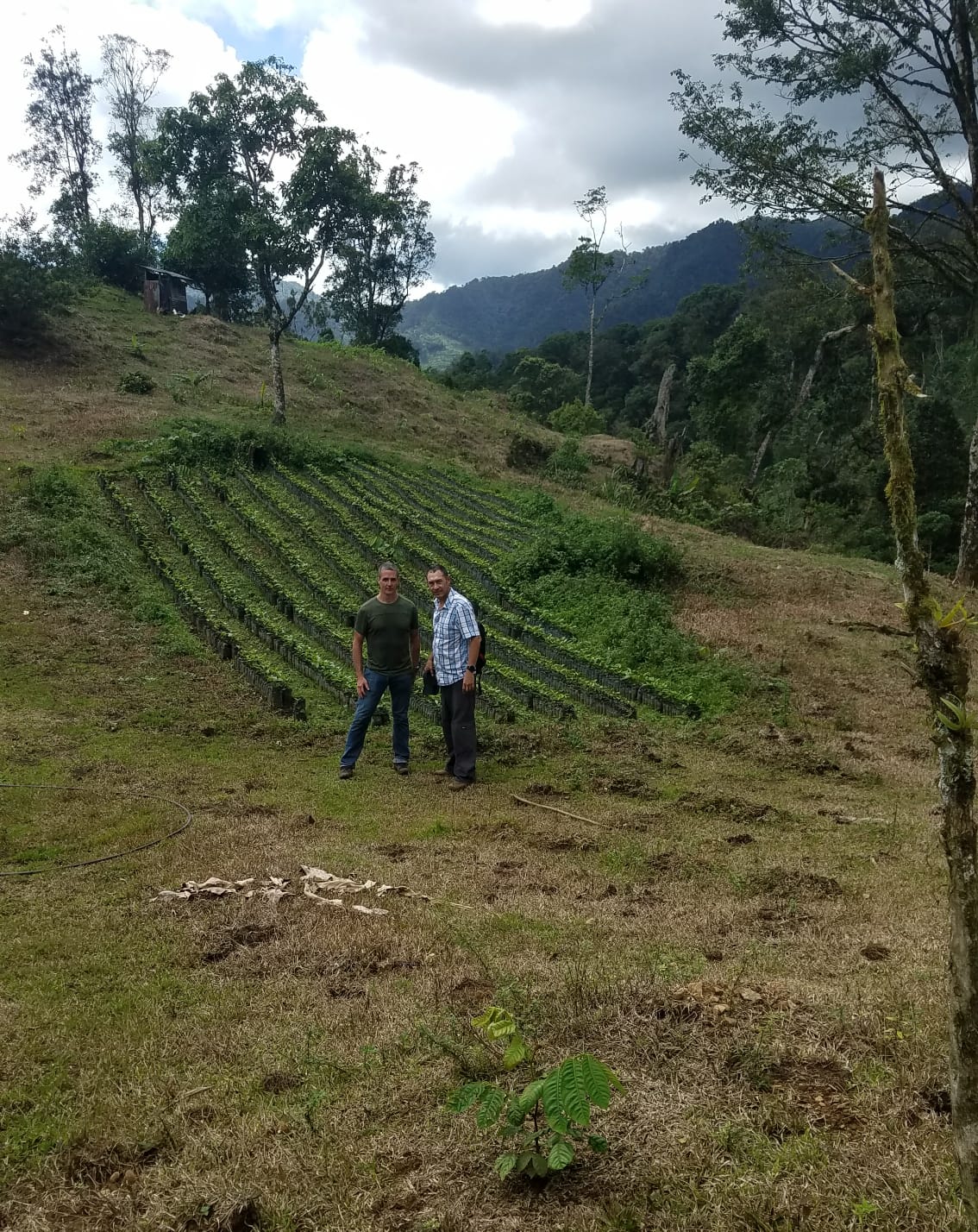
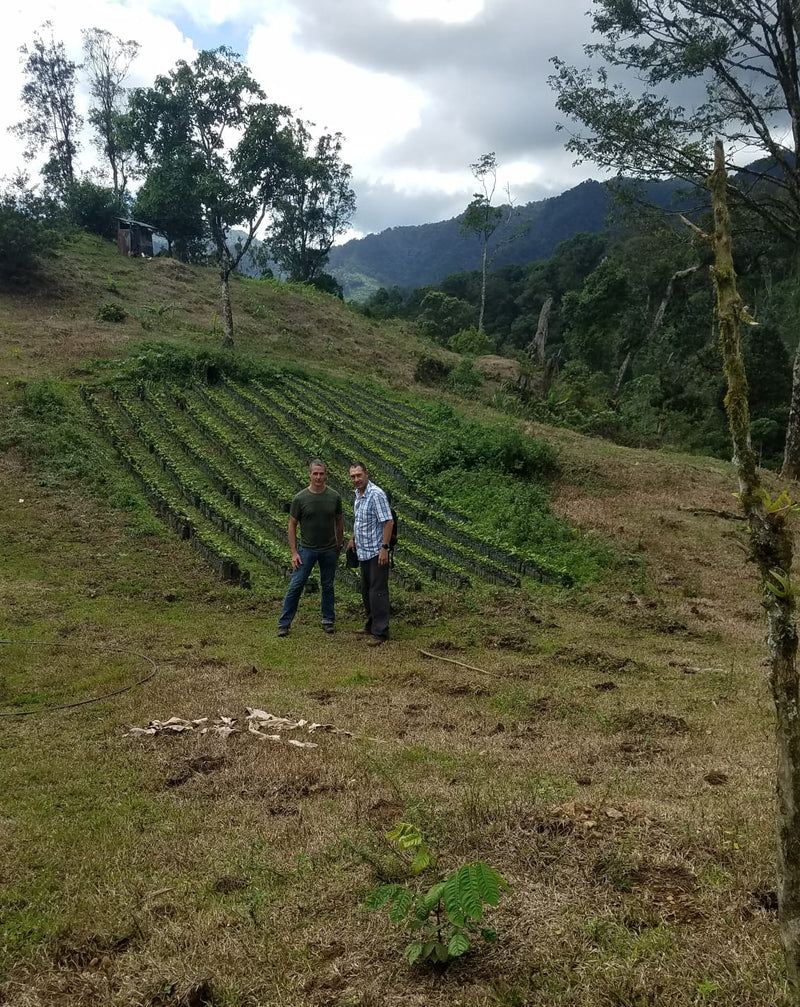
Until global warming creeps up into the Rockies, weāre probably going to have to continue buying coffee from the tropics. Except for Hawaii, the United States is not in the tropics. So, apart from over-hyped Kona blends, we arenāt able to grow our own coffee. I travel to places like Colombia, Nicaragua, and India in order to get to know the land and the people who are responsible for the broad range of coffees I roast. Like the people who grow the coffees, each one has unique characteristics, bringing the aromatics from these exotic origins to your morning cup.
You probably donāt pay any attention to the commodity markets. Or tax rates. When a vote comes around for a third-penny sales tax, you probably donāt even know or care what a third-penny is. So I certainly wouldnāt be surprised to learn that you donāt know what tariffs really are, and you might even think the US government is levying these taxes against other nations.
Maybe you like the idea of tariffs. Maybe you think we can bring manufacturing back to the US if we make imported goods really expensive. Everything you see at Walmart could be produced in our nation's factories, built by American hands. Perhaps youād like to have a job on an assembly line. Probably pays pretty well, right? Maybe then we can isolate ourselves from the rest of the world and create a homogenous society like the pilgrims always dreamed of.
Tariffs are taxes charged to people in the United States who import goods from other countries. I pay tariffs when I import coffee from producing countries. Iām paying tariffs on The Coffee Purist book, which is being produced in China. When I buy coffee from other importers, they pay the tariffs. But guess what. That increases the cost per pound, so they charge me and I charge you. Trickle-down economics, Reagan might call it. We havenāt felt the full impact of tariffs yet because weāre all still selling through pre-tariff inventory, but little by little itās creeping in and youāre going to take it on the jaw.
While the commodity market (a financial market that speculates in oil, minerals, agriculture products, etc.) plays a large role in the price of commercial coffee (think big brands like Folgers, Maxwell House, Starbucks, etc.), those traders only occasionally provide a base for differentials in higher-end specialty coffees like mine. I happen to be friends with most of the producers I buy from, so I pay them more-or-less what they ask, which is often double what the commercial market is paying. As the commodity market has risen over the past year, the high price of commercial coffee has driven up the costs of these big brands, and the rising tide lifts all the boats. Thank goodness alcohol consumption is on the decline. Perhaps weāll collectively have the budget to spend more on coffee. (See graphic.)
But beware. Do your research and youāll find that nearly every coffee roaster in the US claims to have relationships with the folks who produce their coffee. Iām not sure if everyone is simply using the same AI bot to write the āabout usā section on their website, or if they lack the integrity to tell you the truth about their āethicalā sourcing. But very few have actually been to the places where their coffee is grown and even fewer know the people who grow it. If they did, they certainly wouldnāt hide behind names like āSouthern Weatherā or āMonarch.ā Perhaps they would write the name of the producer on the bag. Or some other foreign word that causes you to try and pronounce it in your head over and over again, e.g. Lah Mee Nee Tuh, Bam Bee Toh, Moan Tay Leen, etc. (Those are farm names.)
With escalating prices, due to tariffs and commodity markets, a lot of āspecialty coffeeā roasters are choosing to buy lower-quality coffee in order to keep their prices in check. Thatās an easy thing to do, particularly when youāre not friends with the producers. I could simply call one of the big importers and ask them to send me samples of a few big commercial lots, and even though the coffee wouldnāt taste as good, most consumers are price sensitive and care less about quality than value. If you look around at any coffee shop (mine included), youāll see that most people are consuming coffee with milk and sugar and flavorings. (We only have chocolate ā and even though most people prefer it, ours isnāt chocolate-flavored syrup; itās actual chocolate). Milk and sugar and flavorings mask the taste of bad coffee. Bad coffee is the result of laziness, ignorance, or prioritizing money over quality. If our āspecialty coffeeā roasters continue to pay low prices and purchase low quality coffee for their production roasts, blending to hide the defects and the farmers, the small producers around the world who are trying to elevate their craft will have no incentive to continue striving for quality. And that will be a HUGE loss.
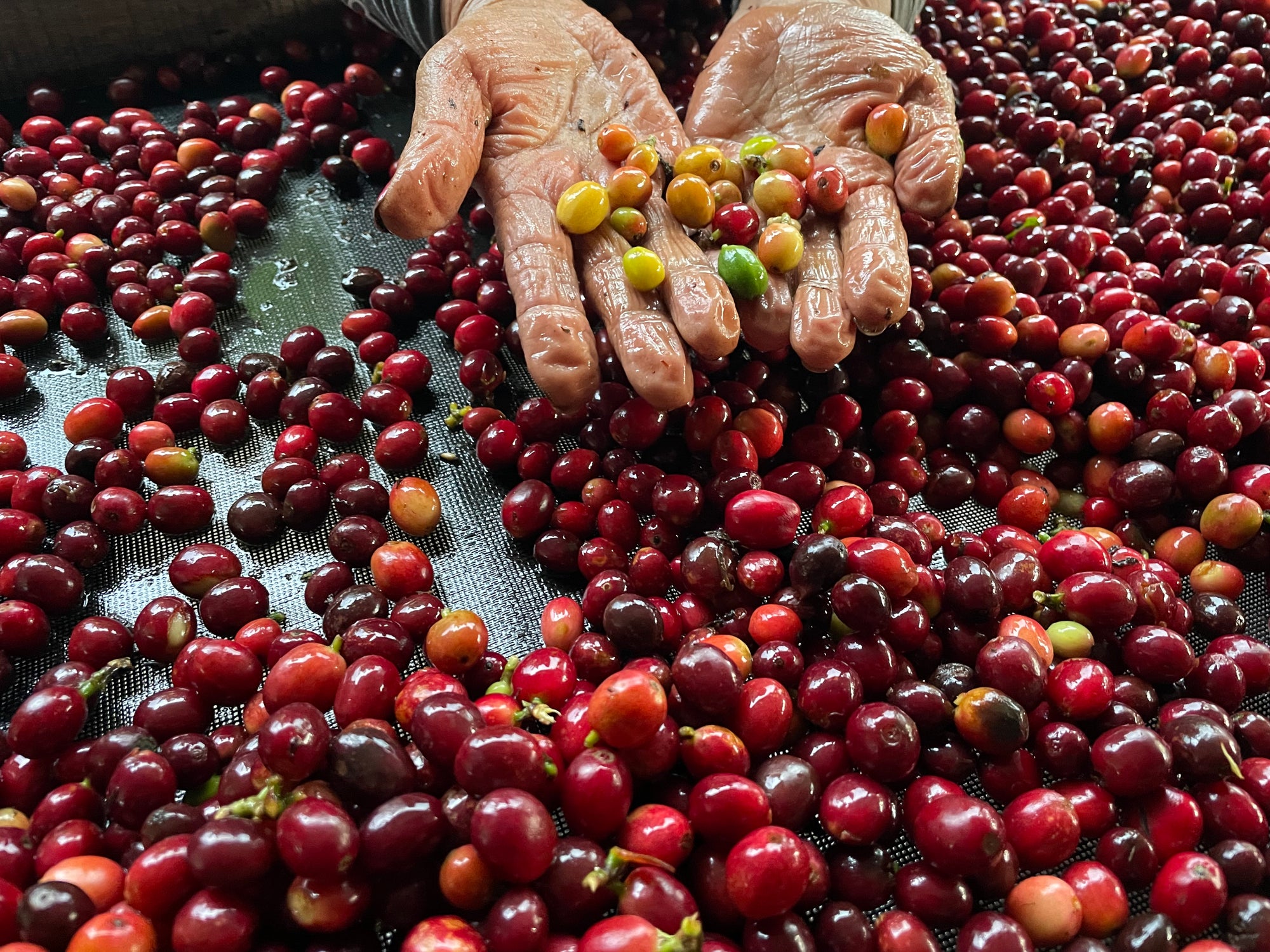
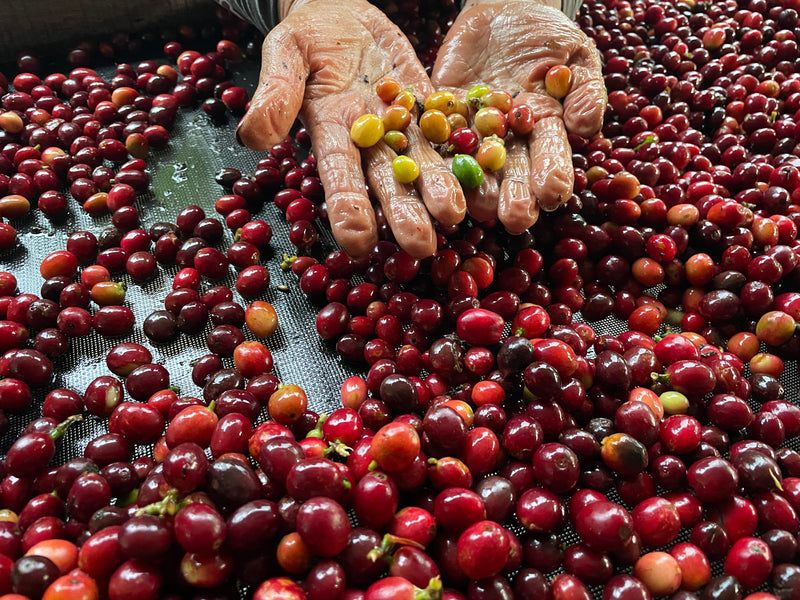
I do my best to honor the farms where the coffee comes from and the people who work hard to produce the coffees. Iāve tried like hell to develop relationships with people around the world who I trust to produce excellent coffee and who believe in the same ethics of quality, hard work, and integrity. I love the craft that coffee can be ā using our hands to care for the coffee plants on the farm and to pick the coffee cherries off the trees when they are ripe. To feel the coffee on the drying bed or the fermentation tank to determine its readiness. Hand-sorting coffee beans for quality, removing those beans that might taint our delicious brew. Even loading the coffee into bags at the mill and carrying those bags on menās shoulders to load into a truck or container. My hands turn knobs and push levers, pulling the trier to see how the coffee is progressing through the roast. I roast by hand and I use my fingers to comb the quakers out of the cooling bin as it spreads hot beans over a high-speed fan. I love a good hand-made pourover. Itās the way Juan Ramon makes me coffee when Iām at his farm (Montelin) in Mosonte, Nicaragua. Thatās how I make my coffee every morning when I wake up, even using a hand grinder instead of electric. Itās the manual nature of it all that draws me to it. Iām blue collar through and through. But I have expensive taste.
When people tell me they donāt like coffee, I say I donāt either. Because I can guarantee that the same coffee they didnāt like, I also donāt like. Iām not sure where a good price point would be for that commodity coffee. I suspect most producers are breaking even around $2 per pound, so for sustainabilityās sake, it must be higher than that. But with the commodity market fluctuating around $4, itās pushed specialty coffee prices into new territory. Specialty coffee is not commercial coffee. We are not Starbucks or Folgers. So what is the right price for specialty coffee? Right now, Iām paying a huge range of prices for coffee. Frankly, the cost of living is different everywhere I go. Thatās part of the reason Hawaiian coffees are so expensive and Vietnamese coffees are so cheap. Living in Panama is not the same as living in Nicaragua. Hell, I could live like a king in Bolivia. So each producer asks me for a different price. I want them all to be successful and continue improving their quality each year. So I pay it. Do I think specialty coffee prices are too high right now? No, I think weāre used to paying too little. We all need to get accustomed to the idea that inexpensive coffee is not good coffee.
We have no way of knowing whatās happening on the local level for coffee producers, but I can tell you that exporters and cooperatives have power over small producers. So even when you see the C-market soaring, that may not trickle down to the farm level. When you buy coffee, whether you like it or not, youāre making an impact by supporting either low quality or high quality, either commercial or specialty. When you support low quality, youāre feeding into a system that doesnāt care about people, only about money. If you care about people, Iād suggest you carefully consider your purchases. (If youāre reading this, ignorance is no longer an excuse.)
Coffee bean prices at DoubleShot are going up. Iām paying more money to producers than I ever have. And since Iām not rich and privy to loopholes in the tariff assessments, weāre going to have to continue paying extortive taxes to the federal government. But I donāt see these prices ever coming down. Even though it pains me to have to charge my customers so much more money for excellent coffee, Iām happy that the farmers are finally making the profit they deserve. Our coffee has gotten better over the years because of access to better beans, acquisition of better equipment, and more experience roasting different types of coffees from all over the world. Iāve just gotten better at it. Better equals more value, and more value costs more money.
Itās still an affordable luxury.

Pictographs and Paint Cans
Nowadays itās mostly my own madness, but we used to have art shows at DoubleShot. Way back when we were just single-wide, I mounted steel rails high up on the walls that held rods where we hung rotating pieces from local artists. My friend Candice was in charge of contacting artists and scheduling each show. During this time, I learned that many artists spend a lot of time on their works and become very attached, to the point that they put price tags on paintings that almost guarantee they wonāt have to part with them.
Iām not like that. If you even considered me to be some sort of artist, Iād say Iām a production artist, at best. I design things that I want people to take home. I create pieces that are temporary and curious. My work isnāt supposed to be perfect, just interesting. I took a page out of Shepard Faireyās book (of which I have a few) when it comes to posters. I started noticing his OBEY signs around Nashville when I was visiting friends there in 2003. I read Shepardās manifesto. And I brought that ethos into the DoubleShot when I started creating my own works. Itās about asking questions. Itās about piquing curiosity. We want our customers to ask questions so that we can share what we know and what we do. So if you ever see something in the DoubleShot and ask yourself, āI wonder what thatās supposed to mean?ā I did my job. Now go ask a barista.
Art is subjective. Even the definition of art is subjective. Mark showed me that some guy duct taped a banana to the wall and a collector bought it for some ungodly price. Methinks Scotch tape and a coffee bean could be next. But I remember once when a show went up on those 18th & Boston walls, I puzzled at the art and told Candice, āI couldāve done that.ā To which she replied, āBut you didnāt.ā And thatās the rift. Some art is fantastical. Some art is simple. And just because you feel itās beneath you doesnāt mean it isnāt art.
People just like us (only way tougher and more capable) scratched stick figures of people and longhorn sheep, bears, boats, snakes, and all sorts of things into rock walls thousands of years ago. Sometimes they used ochre and other times they tapped the rock in paleo pointillism like Seuratās ancient ancestors. Today we put ropes and stanchions around these images to protect them from being defaced by bored teenagers, and park rangers lead interpretive talks about the people who lived and made art and died in these places.
To some, the geology of the walls is interesting enough, but to most of us itās the art on those walls that draws our attention. Were the paleoindians defacing the cliff walls by making petroglyphs and pictographs up and down the desert corridors? Some primitive form of graffiti? Perhaps they were, but now we protect it as if itās a Banksy stencil on a London flat.
If you look at the definition of graffiti on the internet, itās defined as a form of vandalism, which is āwillful or malicious destruction or defacement of public or private property.ā But graffiti artists arenāt painting in order to cause harm to someone, and in my opinion they arenāt āspoiling the appearanceā of austere, grey concrete walls or decrepit, decomposing factory facades. A lot of these guys are really talented and invest a significant amount of time and money for specialized spray paint to decorate the undersides of our infrastructure. You may not like it because you canāt read it, and when you can, you donāt like what it says. Youāre confused by Rebop, Mango, Swank Tabu and the like. And you donāt like being confused. Because, just like Shepard Faireyās OBEY posters, you might have to actually think and consider the fact that mega-corporations are bombarding you with words and symbols every day in public spaces trying to entice gratuitous consumerism. Words like Nike and Pepsi and those ubiquitous golden arches are so prevalent that you barely even think about it any more; theyāve bored deep into your subconscious.
Iāve never been a big fan of paid advertising. It seems like a promotion lacking creativity when there are so many ways of getting your message out for free. Way back in the early 2000s, Iād put DoubleShot stickers in places they might not necessarily belong. And then a customer named Jonathan showed me how to cut stencils into corrugated cardboard with an X-ACTO knife. So I started spray painting the sides of empty Solo cup cartons with the word COFFEE and some with a primitive-looking DoubleShot logo, and zip tying them to telephone poles up and down Riverside Drive. People would see a sticker at, say, Turkey Mountain and then follow my kraft blazes down the river to our front door for coffee. Once, a city worker came to DoubleShot with a big stack of my cardboard signs and told me it was against the law to put them on city poles. I was thankful that he returned them, comped him a cup of coffee, and promptly went back out to zip tie them on poles that our governors have no authority over. Then I discovered the stencil burner and mylar plastic sheeting.
If youāve been around long enough, youāll remember that most of the DoubleShot tshirts, hoodies, and trucker hats from the early years were painted by my dad and me with stencils I cut in plastic. We had a lot of fun airbrushing multi-layered stencils, and the designs were only limited by our imaginations.
My dad and I started restoring vintage cruisers and I created a new company called Native Bikes. We would disassemble each one and fix whatever might be wrong, sandblast the frame, and I would dream up a theme and paint scheme, oftentimes using stencils for flames, names, and patterns. The logo Iād created for Native was cut into an aluminum head badge, which branded the front of every one of our bikes, including my own racing bike.
I took that Native moniker with me on many mountain bike journeys. We painted my bike frame a metallic grey and baby blue with flames on the top and down tubes, and I named it nemesis. That bike and I felt like the nemesis of many cyclists, and our go-anywhere approach made us the antagonist to customs, regulations, and laws across the American West. The name stuck, and when I took to the streets with stencils in hand, it felt only natural to bring it with me. But Iām a minor figure (even a non-entity) when it comes to art.
I did attend a liberal arts college, where I was required to take an art participation and an art appreciation course. So I chose hand built clay (which found me crafting slab bowls and animated statues) and āClassical Gods and Heroesā (which introduced me to The Odyssey and all manner of other Greek mythological characters). In most forms of art, Iām better at appreciation than I am at participation. So I admire the 3,000 year old rock art in the Colorado river valley outside Moab. I appreciate the genius of renaissance painters whose work dangles on museum walls. I gawk at massive, corpulent black statues in Botero Plaza in Medellin. And I marvel enviously at the skill of people with aerosol paint cans who create whimsical, colorful, intricate designs in the nooks and crannies of public spaces, most of which you wouldnāt dare to go.
Like the Hindu rangoli designs on the doorsteps of homes I visited in India, street art is temporary. Government employees and citizen vigilantes are constantly blocking those colorful concrete paintings in drab grey and brown overcoats. I admire the art until it disappears, and then I wait for creatives to redecorate on some moonlit night. Like discreet billboards, our street artists are painting their tags in places you might have to look for. Oftentimes they wonāt block out your view of the countryside, but peek out from the buttress of an overpass. Thatās the way I like it. Art only found by the curious and observant.
And since I love free advertising, Iāve taken this opportunity to borrow my favorite Tulsa tag for a new line of products. Fittingly, this comes from my other company, Native Design, through an off-color project I call nemesis.
Over the years, Iāve ripped off some of the best. Shephard Fairey, Banksy, the paleoindians, Maurizio Cattelan, Johannes Vermeer, Bob Bernstein, Rube Goldberg, Magritte, Gainsborough, Vettriano, Picasso⦠Boost.
I am the nemesis, after all.
Ā
Coffee in one hand and candy in the other
Times have changed. Iāve fought it, and mostly lost.
I am afflicted with a resilience and steadiness that throws most people off. But it comes with a downside. I have ideals that I chase, doggedly believing Iām going to change the world. And the world largely ignores me. Inside, I feel calm and uncompromising until I donāt. Then a figurative storm erupts inside and the acid rain of crushed hope pours down, washing away my dreams until I resign to no longer care. Because sometimes I feel like not many people in the world do care. And sometimes I wish I didnāt.
Yesterday was one of those days. It was all over my face, because I wear my heart on my sleeves. I was a bear, impossible to mollify. I barked and snarled and growled. I looked around for problems I knew I couldnāt untangle. I thought about issues Iāve tried to fix for years with no success. I resolved that Iād stop giving a damn, stop noticing, stop expecting. But the problem is, as a like-minded friend put it, I have high standards and I expect a lot out of myself and others. Thatās a problem because I canāt just salve my discouragement by lowering my expectations of those around me; it would require lowering the expectations I have for myself as well.
I donāt have to lower my personal expectations because when it comes to getting shit done, Iām a machine. I could probably out-work my dad, which is no small conjecture. I learn fast and adapt and use tools Iāve developed over the years to ensure Iām doing my best work most of the time. I do not care what it takes to get something done, I will do it. My mantra has long been: āYou canāt beat me.ā Donāt even try.
So that leaves me in a quandary. I try to give people the tools to achieve excellence, but they donāt like my tools, donāt use my tools. I try to show people a better way, but people donāt want a better way. I remember when I was alive in Boulder Colorado, I looked around at the opportunity to give that community better coffee. They hadĀ decent coffee at places like Brewing Market and Peaberry Coffee. But Boulderites preferred the swill served at Trident over on Pearl instead. I knew I could make coffee that was better than anything ever brewed in that town, but eventually I realized Boulder didnāt want better coffee.
And sometimes I wonder that about Tulsa, a less-inspiring place to drink coffee - and maybe thatās precisely the reason we should be drinking better coffee. We donāt have mountains outside our windows to distract our attention. We donāt have world-class athletes rolling in on bicycles to meet up for a cappuccino. (We do, but even the athletes in Oklahoma have to leave in order for us to acknowledge their accomplishments.) We donāt have ācoolā to obscure a lack of āgood.ā
A lot of people come to DoubleShot. Not every day. But the number of people who have been to DoubleShot must be in the hundreds of thousands, if not in seven figures. And in the early days a lot of those people came because the coffee was good, yes, but also because there was something in the air. Not just my air, but all those tall guys wearing tight black t-shirts brought something special too. Most of them came from a conservative Christian upbringing, like me, and I suspect they appreciated being in an environment with passion (a word derived from the suffering of Christ), rules and high standards.
Passion comes from the same Latin root as patience: an attribute my mother warned me not to pray for because God might grant that trait through long-suffering and adversity. But I didnāt need God to pepper my life with tribulation; if there is a path of least resistance, I choose the other. Itās one of the reasons I divorced myself from the church as a young adult. Iād been thinking about what type of person I wanted to become and what it might take to achieve that. I looked around, comparing peopleās lives with the resulting character I saw in them, and it seemed clear that hard work and endurance were the keys to building the life I wanted. I saw that the life of ease tends to make people weak, negligent, and unprincipled. And the words Iād heard so many times growing up in church echoed through my head: āLet go and let God.ā Itās a New Testament ideal, a far cry from the Oldās trials of Job. I saw that nouveau doctrine playing out in my church, with the faithful beseeching God to do things that only required a little clever rumination and elbow grease. And I knew our differences were irreconcilable. (What would my earthly father have said if I leaned on him to do the things I was too lazy to do myself?)
Around that same time, I was exposed to the ultra-wealthy population of Tulsa when I moved here from rural Illinois to become a personal trainer in Midtown. I couldnāt even begin to comprehend the riches that these people had, and most of them came from generational wealth, compounding the divide between us. They couldnāt comprehend the life Iād come up in or the lifestyle choices I was forced to make. At first I was a little intimidated, because weāre taught that money is power. I wasnāt sure exactly what that meant, but it didnāt take too long for me to realize that sentiment doesnāt hold true in the gym. I flipped the narrative upside-down and made sure my clients understood the power structure when it came to strength and fitness, and I was their master. Iām a generalizer and things were really clicking into place for me as I trained my body and mind with self-imposed hard work, strain, consistently pushing and expanding my limits. You canāt buy that. Thereās no easy way to attain the types of traits that I wanted to define my life. This is where I thrive, eschewing the Tim Ferris-style life hacking and lottery-winning shortcuts to āsuccessā in order to just buckle down and engage in good, honest labor. Because whenever you see a rich person who is really fit, they may have had the leisure time to train more than average and they may have had the funds to eat healthier than usual and they may have even hired people to coach them in the right direction. But they still had to put in the work, develop the self-discipline, and do things they may not have wanted to do in order to achieve that goal. I bet thatās hard for a rich person.
But maybe they just had cosmetic surgery. Liposuction. Iāve always wanted to get liposuction. I just need to rid my belly of all the excess fat cells I developed as an Oreo-addicted adolescent and Iām just sure I could have a six pack. But Iām too much of a coward, all the what-ifs and unintended consequences dissuading me. And then thereās the fact that itās cheating. I nearly cheated in college. Not on exams or in anything academic (unless you consider using my charming personality on my professors, cheating). I nearly cheated in my extracurricular religious pursuit: football.
My hometown friends and I idolized a bodybuilder named Mike OāHearn, because he claimed to be a ānaturalā bodybuilder, meaning he didnāt take steroids or growth hormone or any other banned substances. But the guy was massive and ripped. Broad shoulders, huge pecs, six-pack abs, and hulking thighs, he was a statue of manly perfection. We wanted to be him, and the idea that he managed to grace the cover of Muscle & Fitness Magazine through sheer hard work was all I needed to hear. Iām sure thereās a certain amount of genetics involved in the disparity between my body and OāHearnās, but I watched other guys in the gym begin to look like him while I continued to look like me. The difference? Those guys were doing āroids. I knew there was at least one guy on my college football team doing steroids and I suspected there were several others in the conference who were juicing. We all knew pro cyclists like Lance Armstrong were cheating, baseball players were being found out, and the idea that the massive men playing in the NFL were passing drug tests seemed like a farce.
So I carried $250 cash in my gym bag every day for a couple years. Each day I went to the gym intending to spend the money with some Mike OāHearn lookalike who would give me the gym candy, take me into the locker room and show me how to inject it into my arm or leg, or maybe it was oral. Hell, I had no idea. But every day I would get to the gym and remind myself that it was cheating. Anyone could take steroids and get jacked. The trick, for me, was building a huge amount of strength, power, size, and speed without cheating. So I never did it.
Those are called principles.
I went to Society on Cherry Street to have a burger for lunch. Itās not the best burger or fries and the service isnāt particularly good, but Iām a man of routine. I donāt like to exacerbate my decision fatigue by trying to decide where to eat. They have a nice patio with a blazing fireplace, and I donāt generally feel sick or bloated after eating there. When I walked in, I recognized a man sitting at my usual table who has been a regular at DoubleShot since the very early days. He was friends with Chicago Bob, who shockingly died in a car accident. I donāt really know this guy, but heās quietly been around for a very long time. In fact, Iād just seen him at DoubleShot earlier in the day. He was engrossed in conversation and didnāt see me, and I didnāt particularly feel like idle chit-chat anyway. Eventually he left, but came back because he forgot his scarf. And then he happened to noticed me, and came over to my table. He began to tell me that DoubleShot is a really special place. He said my work is understated but the passion that I have seeps out into the customers and creates a āsacredā space. He said that itās become a āhome away from home,ā and that itās meant so much to him and his family for many years.
I knew this guy was solid because of the people he hangs out with, but his words really meant a lot to me, especially with my current state of mind. He wonāt have any idea, but everything he said was just what I needed to hear. I almost had tears in my eyes, but he left with his scarf and I stoically finished my burger. Then as I got up to leave, a man at another table called to me and said, āI know who you are.ā I walked over to his table and he told me he really loves DoubleShot. He said he drives by every morning on his way to work and stops in every Friday for a treat. He brought his daughter there and now she goes every day. He said itās really something special and that the coffee is the best in town, maybe anywhere.
I was flabbergasted. I had no idea what to say to either of these guys. I just thanked them and told them I was having a hard day and their words meant a lot. I know that we tend to believe in the supernatural based on unexplained coincidences, and I felt that. It truly seemed like something compelled me to go to Society (as opposed to eating ramen at my desk or Rooseveltās, my other lunchtime haunt) and that same spirit coerced these two men into saying something to me. The Great Spirit, maybe, which guides me when Iām in the wilderness. Or maybe it was just the random kindness of people.
It buoyed me a bit, and I started to think about all the problems I experience, all the hurdles, all the aloneness I feel. I thought about what that first guy said about my passion creating a sacred space. And I could feel myself centering once again. I think after my mother got sick and stopped working at DoubleShot, I found myself in the midst of so much sudden change and paperwork and in a management crisis. I started focusing on how to fix the problems and took my eye off of the basis of my beliefs. What makes DoubleShot different from every other coffee company out there is our unwavering commitment to operating under a strict set of standards. Beneath those are a list of values and practices that define who we are and what we believe in. Not everyone who comes to DoubleShot will know that itās this way, but if you hang out long enough, one should feel it.
After lunch, back in the office, I went on a long tirade about our company values. I think what I realized after talking to the two guys at Society is that the people who āget itā are folks who understand that the coffee is really good because of my unwavering commitment to that core set of beliefs. They love the coffee, but they arenāt surprised that itās good because they know Iām stalwart and resolute. Most people arenāt a part of our tribe. Theyāll get mad that we messed up or theyāll disagree with the way we do something and start patronizing another shop that doesnāt know their ass from a hole in the ground. Not enough people buy into the idea of foundational values for a business, but if we donāt start focusing on the importance of those things, this place is going to careen into oblivion and Iām going to let it.
I slept hard and dreamed vividly and woke up feeling like Iāve been trying to maintain the āold wayā during a changing culture that has lost sight of what coffee really is and what it means to do things with integrity.
People donāt know how fragile this ecosystem is. Iām still the key man and if I go out in the wilderness and donāt come back or if I give up hope and decide not to continue, the whole DoubleShot experiment is over. Thankfully, there are people like the two men at Society who preserve the integrity of this thing with their appreciation and assurance that Iām not wasting my life. Itās about a lot more than our original mission. Today, our continued existence must revolve around that list of values, practices, and core beliefs.
So here it is:
Craft - hands-on roasting, packaging, design, storytelling
Knowledge - history, science, agriculture, processing, varieties, cultures, equipment, consumer behavior
Integrity - honesty, fairness, reliability
Quality - product, place, intentionality in all
Work Ethic - think about the meaning of those two words
Relationships - with the producers of all our products, our customers, and others in the industry and our community
Proficiency - sourcing, roasting, design, drink-making, and storytelling in the written word, videos and audio production
Conservation - not wasting resources, over-using energy, or throwing away what can be reused
Freshness - not compromising this for a dollar
Health & Fitness - through sport, eating well, encouraging regular exercise and healthy coffee drinks
Ā
Iām constantly thinking about what makes us different from all the other coffee roasters out there. The big guys like Starbucks and Dutch Bros, to my estimation, have no interest whatsoever in coffee. They are caffeine dealers, at best. They are huge because they scratch the itch of mainstream society. Sugary, caffeinated milkshakes are what most people consider ācoffee.ā Caffeine is not coffee.
But what about the local roasters that have popped up all over the US over the past few years? Thatās good, right? Because, as I learned way back in 1998, freshness is really important when it comes to the taste of coffee. But that was just the first thing I realized when it came to roasting. Since then, Iāve developed a whole arsenal of skills and knowledge that determine whether or not that fresh-roasted coffee will taste good. Most roasters donāt know and donāt take the time or have the curiosity to find out what those factors are. Iām sure youāre not aware of this, but the overwhelming majority of small roasters are roasting the same coffees, maybe calling them something different for the sake of marketing, and donāt have the first clue how to actually roast coffee because their roasting machine is computerized and programmed solely to turn green coffee brown. They donāt have the palate, the interest, or any concern whatsoever about serving you an excellent beverage. They have cute names for their blends though.
How about the heavyweights in the specialty coffee sector? You probably know the names. Well, letās ask some questions. Why are they selling so many blends instead of focusing on relationships with producers and highlighting single-estate, single-variety coffees? Whatās with all the expensive packaging? Why are they selling coffee in 10-ounce packages for prices that you would normally expect from very high-end 16-ounce bags? Why donāt they talk about how they roast coffee? Who is roasting the coffee? Is it a robot, like the robot baristas they showcase?
What about all the fancy brands you see on the grocery store shelves? A lot of those are local. But coffee beans on the grocery store shelf are not fresh. The roasters put ābest byā or āexpirationā dates on the packaging, generally a year from the time it was roasted. Thatās not quality. Thatās a money play.
All the hoopla about AI these days is infiltrating everything from decision-making to art to communication. Need a website? AI will design one for you with AI generated images and AI generated text. Want to start a roastery and coffee shop? No doubt, AI will order your coffees, roast them, make the drinks, greet your customers. Everything except cleaning the cafe. Youāll still need to hire immigrants to do that. Is that what you want? Do you want to go to a coffee website and look at fake images and read text composed by a computer?
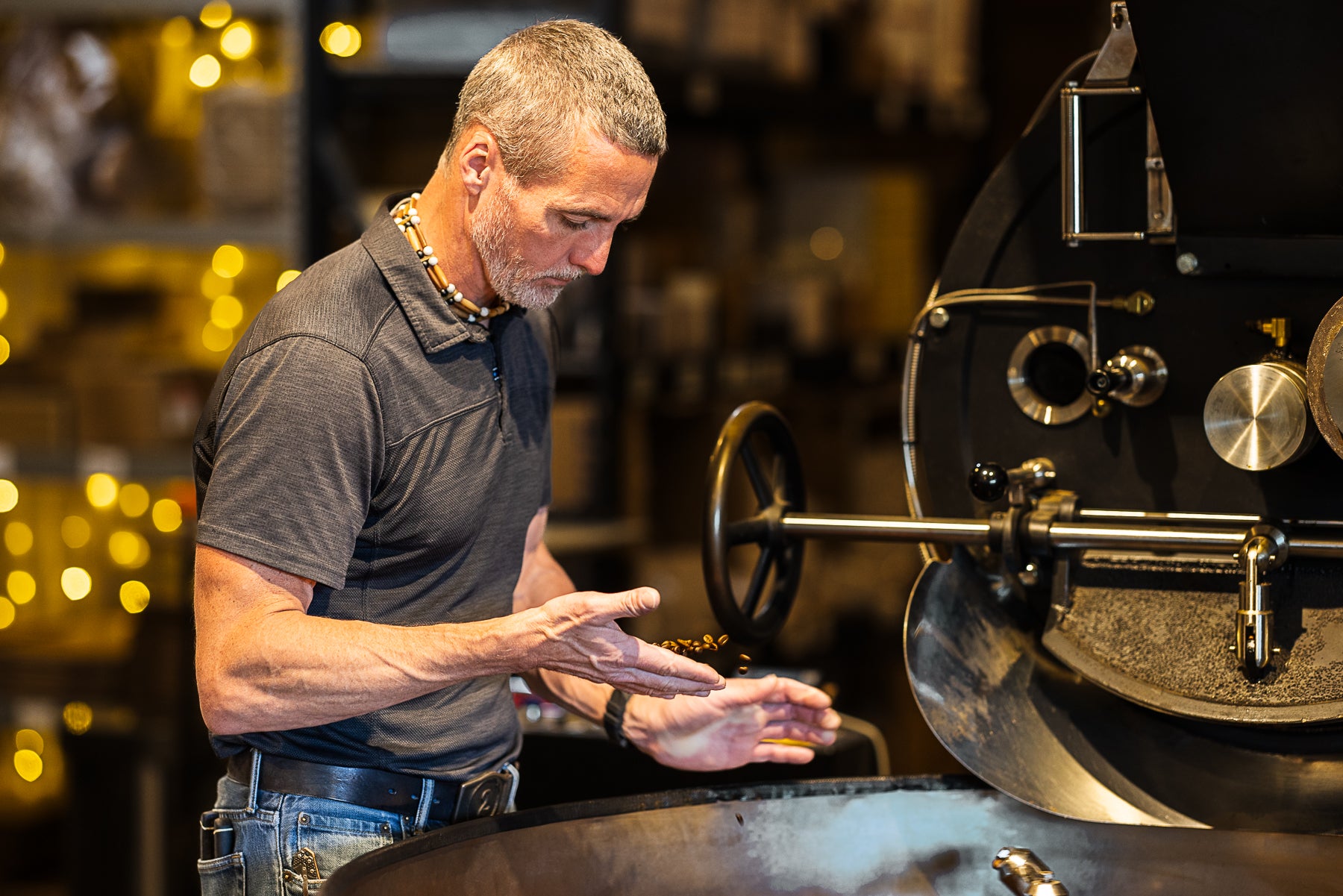
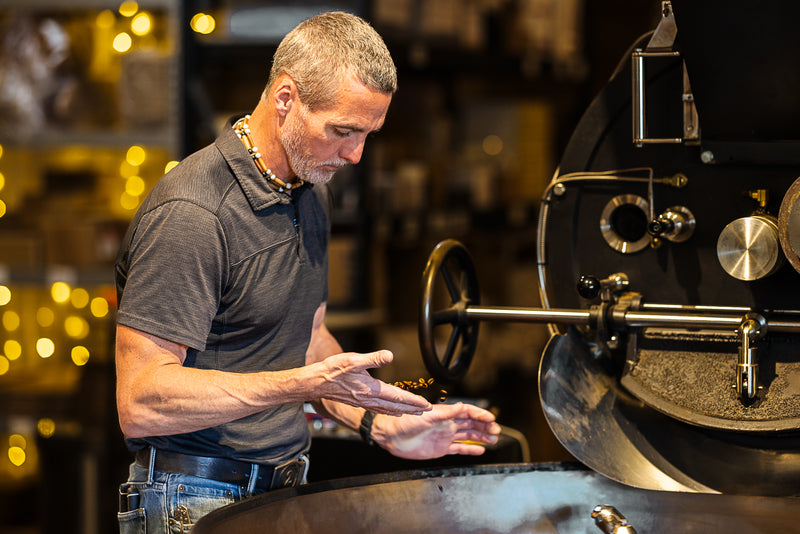
At DoubleShot, we do everything the hard way. I design all the packaging, and sometimes I even craft the packaging myself, by hand. I travel to places where coffee is grown, so I can see the farms and understand how they are processing the coffees. I get to know the people who grow our coffee. I manage all the logistics and financing to purchase and ship coffees. I cup and use my experience and palate to discern what coffees are best for our portfolio. I roast all the coffee myself. And with the help of staff, all that coffee is sorted, packaged, distributed, brewed, and sold. They call us āold school.ā
People occasionally tell me they want to open a coffee shop. When I hear that, itās no different from someone telling me they want to start working out. Maybe they want to look like Mike OāHearn. Maybe they want to serve really good coffee. Either way, itās going to require a herculean effort over a long period of time. And if itās not hard, youāre probably not doing it right. Sure you could cheat - like my desire to do steroids or get liposuction. But again, true satisfaction in life is the product of hard work, discipline, endurance, adversity, even suffering. Avoid all that and you might as well have stayed your ass on the sofa eating Cheetos and THC gummies with over-ear headphones, engrossed in watching someone else play video games.
Ā
Hereās the hard truth: No one likes the guy who leans into principles.
You may feel a sense of security and consistency and assuredness because of him, but heās impossible to be around. Which leaves two choices really. Retreat inward, maybe escape to the woods. Or kill that old man. Itās likely the estimation made in my early 20s was completely wrong and I became an intolerable person. A machine, sure. One designed for work, not love.
Walking up to work this morning I thought about Isaiah and his exodus from Archetype Coffee. Iād be willing to wager that he could keep going, except itās too hard to experience extreme, untold stress all day from work and then leave work to experience derision for not doing things the way that conventional wisdom would say a business should be run.
I operate as close to my limit as possible nearly all the time. It doesnāt take much to push me over the edge. And Iām probably teetering on the edge right now. Over the edge is the idea that no one cares, that this is all a lot of very hard and complicated work, and itās all for nothing. On the other end of that totter are those grounding principles. At the end of the day, it doesnāt matter if anyone agrees with me or not. I either live by my principles or I disappear.
There are too many people on the wrong end of that board. We need more folks who are steadfastly bound to the ideals. A few of us outweigh a multitude of them, because they are empty.